Language Revitalization
Language Endangerment
We’ve previously covered the diversity of human languages: their sound systems, their word structures, their grammars, and the ways they shape (or don’t shape) how their speakers think. Unfortunately, a large fraction of that diversity is disappearing.
The Scale of the Problem
Estimates vary, but a common figure is that around 40% of the world’s languages are endangered. Most of these have fewer than 1,000 speakers. In 1992, Michael Krauss gave a high estimate that 90% of the world’s languages could be dead or doomed by the end of the 21st century. Today’s estimates are fortunately well below that. See for example Ethnologue and the Endangered Languages Catalogue (ELCat).
Why so many? A few dozen languages account for over half the world’s population, while thousands of languages have just a few speakers each. And endangerment is not evenly distributed across the world.
Here’s the state of things in 2023 showing where the endangered languages are concentrated:

Case Study: CaliforniaBefore European contact, it was one of the most linguistically diverse places on Earth, home to around 90 languages from many unrelated families. Today, many of those languages have no first-language speakers at all, and almost all of the rest are critically endangered. One of them is Owens Valley Paiute (Nanüümüyaduhanna), a Uto-Aztecan language of the eastern Sierra, with fewer than ten fluent speakers. You can help with revitalization efforts! Visit the Kubishi Portal and browse the Language Program site and see what interests you.
How Languages Die
Languages definitely do die from war, disease, and genocide. More often, a language dies through language shift: a community gradually stops using its language and switches to another, usually one with more economic, political, or social power. The shift usually takes three generations:
- Grandparents speak the heritage language natively and learn the dominant language as adults.
- Parents are bilingual, but speak the dominant language to their children, often in hopes of giving them a better chance at school and work.
- Children grow up understanding a little of the heritage language, or none at all.
The pressures behind shift are rarely neutral. Colonization, forced relocation, and outright suppression played a huge role. In the United States, Canada, and Australia, Indigenous children were sent to boarding schools where they were punished, often brutally, for speaking their languages. Economic pressure, urbanization, stigma, and the dominance of a few languages in schools and media continue the process today.
Recall from the notes on language acquisition that children acquire language from the people around them, effortlessly and without formal instruction. That’s why intergenerational transmission is the most important factor in whether a language survives. A language that children aren’t learning is in trouble (no matter how many adults speak it).
You’ll really want to read this book:

The UNESCO Classification
UNESCO’s Atlas of the World’s Languages in Danger (Moseley, 2010) classifies languages into six levels of vitality, based primarily on intergenerational transmission:
| Code | Level | Intergenerational transmission |
|---|---|---|
| NE | Not Endangered (Safe) | Spoken by all generations; transmission is uninterrupted |
| VU | Vulnerable | Most children speak the language but pretty much only in certain domains such as at home |
| DE | Definitely Endangered | Children no longer learn the language as a mother tongue in the home |
| SE | Severely Endangered | Spoken by grandparents and older generations; parents may understand it but do not speak it to children or among themselves |
| CR | Critically Endangered | Youngest speakers are grandparents and older and they speak the language partially and infrequently |
| EX | Extinct | No speakers left |
Transmission isn’t the only factor. UNESCO’s Language Vitality and Endangerment framework (2003) lists nine, including the absolute number of speakers, the proportion of the community that speaks the language, the domains in which it is used (home, school, government, media), whether it is moving into new domains like the internet, the availability of teaching materials, government and community attitudes, and the amount and quality of documentation. Other scales exist too, notably the 13-level EGIDS used by Ethnologue.
“Extinct” or “sleeping”?Many communities object to calling their languages extinct or dead, since the language lives on in recordings, documents, place names, songs, and the identity of the people. Terms like dormant or sleeping are often preferred. Sleeping languages can wake up 🙂. UNESCO itself reclassified Manx 🇮🇲 (in 2009) and Cornish (in 2010) from “extinct” to “critically endangered.”
What Is Lost
Why does this matter?
- Ways of thinking: In the notes on language, cognition, and culture, we saw that languages encode distinct ways of carving up space, time, number, kinship, evidence, and motion. Losing a language is a lost experiment in how a human mind can organize the world.
- Knowledge: Languages carry detailed knowledge of local plants, animals, ecology, medicine, and geography, often nowhere else recorded.
- Oral tradition: Stories, songs, histories, and ceremonies, which often lose much of their meaning in translation.
- Identity and well-being: For many communities, language is inseparable from identity and sovereignty. Studies have linked connection to a heritage language with lower teen suicide rates, and contact with an ancestral language has been correlated with physical health benefits such as lower rates of diabetes and of excessive alcohol consumption.
- Science: Linguists can’t study what no longer exists. Every claim about language universals rests on the languages we’ve documented, and many of the rarest structures are found in small, endangered languages.
Revitalization
It’s helpful to distinguish a few related activities:
- Documentation: Recording a language (audio, video, transcriptions, dictionaries, grammars) so that it is preserved.
- Revitalization: Increasing the number of speakers and the domains of use of a living language.
- Reclamation (or revival): Bringing a sleeping language back into use, often from documentation alone.
Documentation is essential but not sufficient.
“The goal of endangered language revitalization is to create new human speakers.” — Jared Coleman
This is a useful test no matter what technology you are using for revitalization. Here’s a similar quote from Michael Running Wolf, co-founder of the FLAIR initiative: “The practical outcome is more speakers. That’s the sole objective here.”
Strategies
Communities have developed a number of approaches:
- Language nests: Preschools where elders speak only the heritage language with young children. The model began with the Māori Te Kōhanga Reo movement in 1982 and spread widely.
- Immersion schools: Schooling conducted entirely in the heritage language, from preschool through high school (and sometimes beyond).
- Master-apprentice programs: Pioneered in California by Leanne Hinton and the Advocates for Indigenous California Language Survival in the 1990s. A fluent speaker and a learner spend many hours a week together, doing ordinary activities, entirely in the language. It works even when there are only a handful of elderly speakers, which describes most of California.
- Documentation-based learning: For sleeping languages, learners work from archival materials: field notes, wordlists, old recordings, Bible translations, letters.
- Dictionaries, grammars, and learning materials: Often created with or by community members, increasingly online. An example is Kubishi, a growing resource for Owens Valley Paiute.
- Media and technology: Radio, television, apps, social media, games, keyboards, spell checkers, and (as we’ll see) AI.
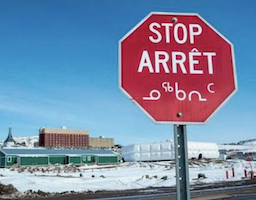
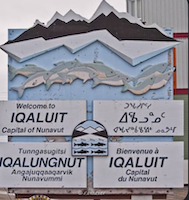
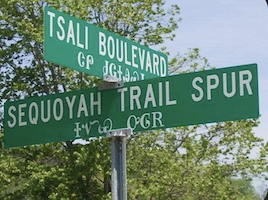
- Official status: Legal recognition, use in government and signage, and funding.



Success Stories
Revitalization is hard, but it can work. Some notable examples:
- Hebrew: The best-known case. Hebrew was used for liturgy and scholarship for nearly two thousand years but was nobody’s native language. Beginning in the late 1800s, Eliezer Ben-Yehuda and many others in Palestine began using it at home and in schools, coining thousands of new words. Today Hebrew has millions of native speakers. (Some linguists, notably Ghil’ad Zuckermann, argue that the result is really a new hybrid language, “Israeli,” with substantial European influence in its sounds and grammar. You can’t stop languages from evolving.)
- Māori (te reo Māori): After a steep decline in the 20th century, language nests, immersion schools (Kura Kaupapa Māori), Māori-language broadcasting, and official status in 1987 brought about a major resurgence. The Māori nonprofit Te Hiku Media has also become a leader in community-controlled language technology.
- Hawaiian (ʻōlelo Hawaiʻi): Banned as a medium of instruction in schools in 1896. By the early 1980s, by common estimates, fewer than 50 children spoke it. The ʻAha Pūnana Leo language nests, founded in 1983, and later immersion schools have produced thousands of new speakers.
- Wampanoag (Wôpanâak): A Massachusetts language with no speakers for over a century, but with an unusually rich written record from the 1600s and 1700s. Jessie Little Doe Baird co-founded the Wôpanâak Language Reclamation Project in 1993, earned a MacArthur Fellowship for the work, and raised a daughter who became the first native speaker in generations.
- Myaamia (Miami-Illinois): The last first-language speakers died in the 1960s. Daryl Baldwin taught himself the language from archival documents and raised his children speaking it; the Myaamia Center at Miami University now supports a growing community of learners.
- Cornish and Manx: Both lost their last traditional native speakers (Manx in 1974), and both have been reclaimed by dedicated communities, with some children now raised speaking them.
- Welsh and Basque: Revitalization through schooling, media, and official status.
Notice what the successes have in common: community leadership, children, and a lot of sustained human effort over decades. Technology has played supporting roles, never the lead.
Many Indigenous technologists building language tools today insist on keeping it that way:
“Our languages are living things. Our languages need to have community relationships. Our languages need to be learned from people. It can’t be pure technology.” — Danielle Boyer
Boyer is an Anishinaabe roboticist who builds robots and language tools with Indigenous communities.
Revitalization and Linguistics
Everything we studied in the human language part of the course shows up when a community sets out to revitalize a language. Going over this material should help you review concepts studied earlier in the course.
Sounds
A revitalization project has to pin down the language’s phonology: its phoneme inventory, allophones, stress, tone, and vowel length. For a language with few speakers, this means careful recording and analysis, and for a sleeping language, it means reconstructing pronunciation from written records made by people who often didn’t hear the language accurately (a missionary writing down a language with sounds absent from their own language will make a lot of mistakes!).
Then there’s writing. Many endangered languages had no writing system until recently, or have several competing ones devised by different linguists over the years. Choosing an orthography is both a technical problem (one symbol per phoneme? which diacritics?) and a political one (does it look like the colonial language? can it be typed on a phone?). Recall the history of the Latin alphabet’s arrival in English and Hawaiian: these choices have long-lasting consequences.
Words
Dictionaries are the backbone of most revitalization efforts. But words in many endangered languages are not like English words. Many Indigenous languages of the Americas are polysynthetic: a single word can contain many morphemes and express what English needs a whole sentence for. That makes dictionaries hard to organize (do you list every possible form? only roots?) and makes learners rely heavily on understanding morphology rather than memorizing words.
Revitalized languages also need new words for the modern world. Communities form language committees to coin them, using exactly the word-formation processes we studied: compounding, derivation, semantic extension, and borrowing. Māori, for example, uses rorohiko (“electric brain”) for computer. Whether to borrow a word from English or build one from native parts is an ongoing debate about identity and purity.
Make a list of “technology terms” (computer, phone, internet, etc.) adopted in Hawaiian, Icelandic, French, Arabic, Mandarin, Urdu, Cherokee, Greenlandic, and Māori. For each term, note whether it is borrowed, compounded, derived, or extended in meaning.
Structure and Meaning
Linguists who document a language usually write a grammar sketch: a description of its morphology and syntax. These grammars can be useful especially when a language has few speakers left. But recall the debate from our notes on structure and meaning between generative and usage-based views of grammar. A grammar sketch is a set of rules abstracted from a limited sample of speech. Usage-based linguists would remind us that what speakers actually do (the constructions, the idioms, the frequencies, the pragmatics) is a much richer thing than any written grammar.
Acquisition
Language nests and immersion schools work because they recreate the conditions under which children naturally acquire language: lots of meaningful interaction with fluent speakers. Adult learners, on the other hand, usually learn from instruction and materials, and rarely reach native-like fluency. Revitalization programs need both: adults to become the speakers who teach the children, and children to become the native speakers of the next generation.
Change
A revitalized language is never exactly the language it was. New speakers, especially second-language learners, bring their first language’s sounds and grammar with them, simplify irregularities, and create new expressions. This is a worry if purity and authenticity are highly valued, but less so if you find fusions, blending, innovation, and evolution as as completely normal (things we saw when looking at how languages change earlier in the course). A language that is changing is a language that is alive. (Remember how Latin is both a dead language and an immortal one?)
Culture
Language is embedded in culture. Some knowledge is not meant to be shared with everyone, or at every time. Coleman notes that in his own community, some stories should only be told during the winter: “How do you maintain that tradition if it’s available online?” Different communities have different rules about what is appropriate to share.
Revitalization that ignores these rules can do real harm. So we have to be careful about what we record (ever heard of programs that scrape everything they can find?) and share. Who may share and how and when and to whom? The tension between gaining as many new speakers as possible and respecting community control over the language is real.
Technology for Low-Resource Languages
The Sunaŵi WorkshopMuch of what follows draws on the First Sunaŵi Workshop, held at LMU on June 8–10, 2026, which brought together Indigenous language workers, linguists, and computer scientists to talk about what responsible AI looks like in language documentation, preservation, and revitalization. The workshop continues as a living document organized around real examples, each with its upsides and downsides, rather than prescriptive rules. It’s well worth browsing.
What “Low-Resource” Means
In our LLM notes, we saw that frontier models are trained on tens of trillions of tokens. Almost all of that is in a few dozen languages, with English far in the lead. Most of the world’s languages have essentially nothing in that mix.
NLP researchers call a language low-resource when it has very little publicly available text, either monolingual or bilingual (parallel with another language). A language with essentially none is no-resource. Nearly every endangered language is low- or no-resource, and many of the resources that do exist are wordlists, grammar sketches, and recordings, not the billions of running words that machine learning feeds on.
Low-resource languages are also disadvantaged at the token level. Recall the tokenizer classwork from the LLM notes: tokenizers are built from training data, so a language underrepresented in training gets chopped into many tiny, meaningless pieces. More tokens per word means higher costs, a smaller effective context window, and a harder learning problem, especially for polysynthetic languages with long words.
More Data Is Not Better Data
When data is scarce, it is tempting to grab whatever you can find. That can backfire badly:
- Scots Wikipedia: For years, a large share of the Scots-language Wikipedia (tens of thousands of articles) was written by one person who did not speak Scots, translating English roughly word by word with a dictionary. This was discovered in 2020. Since Wikipedia is often the largest (or only) substantial source of text in smaller languages, that content went into the training of multilingual models. (Sunaŵi example)
- Crowd-sourced dictionaries: A workshop participant described a student whose model behaved badly for reasons nobody could figure out, until it turned out the student had added crowd-sourced dictionary data to the training set, assuming more was better. (Sunaŵi example)
- Feedback loops: Machine-translated text gets posted online, gets scraped, and trains the next generation of models. In high-resource languages this is diluted by the sheer volume of human text. In low-resource languages, machine output can quickly become a large fraction of everything that exists.
Workshop speaker Emily Prud’hommeaux emphasized that for endangered languages, the quality of transcriptions, mismatches between the domain of the data and the domain of the task, and the modality of the data (speech vs. text) play important roles.
Hallucination in Low-Resource Languages
Recall from the LLM notes that models are trained to produce plausible text, not true text, and that post-training can reward confident answers over “I don’t know.” What does this mean for a language the model has barely seen? Its estimates of $P(\textit{next token} \mid \textit{context})$ for that language are terrible. But it has learned what text in that language looks like (the letters, some common words, perhaps the shapes of words in related languages), so it can produce output that looks right to anyone who doesn’t speak the language.
Yeah, it’s looks right to exactly the people who would be asking.
Some examples from the workshop and its living document:
- Ojibwe Chat: A participant came across a public chatbot advertising English-to-Ojibwe translation. Asked how to say “I know him,” it answered Niminwendaan. Told that was wrong, it apologized and offered Nindinaan or Nindinawem, complete with pronunciations. Both were also wrong, delivered with exactly the same confidence. Asked who made it, it said it was created by developers and researchers at OpenAI. It appears to have been a general-purpose model dressed up as an Ojibwe tool, with no information about who built it or what data it used. (Sunaŵi example)
- Abenaki: In December 2024, the Montreal Gazette reported on AI-generated how-to books for learning Abenaki being sold on Amazon. They contained incorrect translations and even words that weren’t Abenaki at all. Members of the Abenaki First Nation found the books demeaning to would-be learners.
- Choctaw: Jacqueline Brixey, a Choctaw computer scientist (and Sunaŵi workshop speaker), says: “ChatGPT could be good in Choctaw, but it’s currently ungrammatical; it shares misinformation about the tribe. It makes up what it claims are tribal stories.” Made-up “tribal stories” are hallucination at the cultural level (not just at the grammatical level).
- Fulfulde and Greenlandic: A 2025 MIT Technology Review investigation found Google Translate and ChatGPT producing a wrong month name in Fulfulde and failing to count to ten in Greenlandic.
- Speech recognition: OpenAI’s Whisper model was trained in part on 1,381 hours of te reo Māori and 338 hours of Hawaiian, collected by web scraping. On Māori, it reportedly had a word error rate of around 73%, compared to about 38% for Te Hiku Media’s own community-built system. (Sunaŵi example)
- Images: Hallucination isn’t only about words. A participant who wanted illustrations for children’s learning materials asked an image generator for “a Native American boy going to school” and got a child in a feathered headdress. Adding “casual school clothing, without traditional elements” made the clothes more casual. The headdress stayed. The model’s training data is full of stereotypes and nearly empty of real contemporary Native life, and prompting couldn’t reliably fix that. (Sunaŵi example)
The title of one 2023 study says it all: ChatGPT MT: Competitive for High- (but not Low-) Resource Languages.
Why is this so much worse than hallucination in a high-resource language like English?
- The users can’t check. Learners are using the tool precisely because they don’t know the language. Fluent speakers who could catch errors may be few, elderly, and far away.
- Errors propagate. A wrong form learned by a new speaker may get passed on to their students and children. A wrong form posted online may get scraped into the next model. It’s easy for misinformation about the language to spread, and this causes people to adopt the mistakes. This probably happens at a faster rate than typical language evolution by mishearings and mispronunciations since many people are getting the same error. Scarce data makes accuracy harder to achieve, and also makes it matter more.
- It harms trust. Communities that have experienced centuries of outsiders getting their languages wrong have good reason to be wary. A confident, wrong tool confirms that wariness.
- It misrepresents. A tool that claims to speak a language and doesn’t is presenting someone else’s language, inaccurately, to the world.
For a low-resource language, fluency is cheap and verification is expensive.
Where AI Can Help
AI isn’t totally useless for revitalization. But the naive “just ask a chatbot to translate” is dangerous. Here are some notes from Coleman’s LLM and Revitalization article and the Sunaŵi workshop:
- Speech recognition built by communities: In one five-day workshop, O’odham and Piipaash language workers learned to train their own speech-to-text models, and every team got a working model. Automatic transcription can unlock hours of archival recordings that would take humans years to transcribe by hand. (Sunaŵi example)
- Digitizing archives: Handwriting and text recognition tools (such as Transkribus) can turn old field notes, letters, and newspapers into searchable text.
- Grounded translation: The Choctaw Nation of Oklahoma led a project that fine-tuned an open-weight model and paired it with retrieval over the Nation’s own vetted materials, including translation pairs extracted from 19th-century newspapers. Sensitive materials stay on Choctaw-controlled infrastructure. (Sunaŵi example)
- Working with linguistic literature: LLMs are good at reading English. They can help extract vocabulary and grammatical patterns from dense grammar sketches and field notes, and explain them to learners in plain language.
- Data cleanup: Standardizing inconsistent spellings across decades of documentation made by different linguists with different conventions.
- Adaptive elicitation: Helping linguists decide what to ask the few remaining speakers next, so that time with elders is spent well.
- Practice partners: Conversational tutors that let learners practice when no speaker is available. This one is especially sensitive to hallucination, so it needs strong guardrails (see the next section).
Here are some projects reported on in Serena Jampel’s Smithsonian article, each built by Indigenous technologists for specific communities:
- Skobot: A small wearable robot designed by Danielle Boyer that perches on a child’s shoulder and converses in Anishinaabemowin and other Indigenous languages. When asked how to say something, its AI model interprets the question but then selects a pre-recorded audio file, recorded by real children. It never synthesizes language of its own, so it can’t hallucinate a wrong word.
- Masheli: A chatbot by Jacqueline Brixey that converses in Choctaw and English, drawing on a collection of Choctaw animal stories to help learners build conversational skills.
- FLAIR (First Languages A.I. Reality): An initiative at the Mila AI institute in Quebec that builds tools adaptable to many communities. One is a “language in a box”: portable hardware with a voice-based guided curriculum that can be programmed for different languages, built on FLAIR’s research in speech recognition.
The techniques used range from simple to heavy: few-shot prompting with examples, retrieval-augmented generation over a dictionary or grammar, adding new tokens for target-language words, fine-tuning (difficult with tiny datasets), and constraining the model’s output with explicit rules. Wait, what? Explicit rules? That should remind you of....
Can Formal Grammars Help?
Remember studying formal grammars earlier in the course?
Where the Knowledge Is
For a language like Owens Valley Paiute, there is no corpus of billions of words. But there is knowledge: linguists’ grammar sketches, dictionaries, and the expertise of speakers and language workers. That knowledge is in the form of rules and lexicons, which is exactly the kind of thing symbolic AI (GOFAI) was built to use. Recall from our generative AI notes that traditional, rule-based systems “do not require a lot of data.” This probably needs to be part of the revitalization story for low-resource languages.
We earlier covered Chomsky’s original idea of a generative grammar—a finite device that generates all and only the sentences of a language. An LLM generates text that is probably in the language. A grammar generates text that is definitely in the language (assuming the grammar is your definition of the language). When the probabilities are garbage, “definitely” starts looking pretty good.
Finite-State Morphology
Rule-based language technology for small languages has a long track record, especially for morphology. In the 1980s and 1990s, computational linguists discovered that the morphological and phonological rules of human languages, even very complex ones, can almost always be implemented as finite-state transducers. Kimmo Koskenniemi’s two-level morphology and Kaplan and Kay’s proof that standard phonological rewrite rules (as long as a rule can’t reapply to its own output) can be compiled into finite-state transducers allowed for some of the first practical finite-state morphological analyzers and generators.
Remember finite automata from the automata theory notes? This work means that word formation in human languages, even heavily polysynthetic ones, lives almost entirely at the bottom of the Chomsky hierarchy, where everything is efficient (linear time) and decidable. A finite-state transducer can analyze a long word into its morphemes (analysis) or build the word from a root and a list of grammatical features (generation), and it can do it in both directions with the same machine.
Of course there are exceptionsThe famous exception to morphology-is-finite-state is full reduplication, copying an entire stem of arbitrary length, which no finite-state machine can do in general. Uto-Aztecan languages, Paiute included, use reduplication a lot, so practical systems handle it with special mechanisms.
This isn’t just theory. Open-source finite-state toolkits power spell checkers, keyboards with word completion, and dictionary lookup for many minority and Indigenous languages, such as the Sámi languages in Scandinavia, and Plains Cree in Canada. The Apertium project builds rule-based machine translation between closely related languages, many of them small. These tools do not hallucinate: if a word isn’t covered by the rules, the tool says so.
LLM-Assisted Rule-Based Machine Translation
Pure rule-based systems naturally struggle with real-world input that is messy, ambiguous, and endlessly varied. Parsing it with hand-written rules is a nightmare. But understanding messy English is exactly what LLMs are great at. So why not use each for what it’s good at?
That’s the idea behind LLM-assisted rule-based machine translation (LLM-RBMT), developed by Jared Coleman and colleagues (read the paper) and applied mostly to Owens Valley Paiute. The key design principle is:
The language model never freely generates the target language.
Instead:
- The LLM reads the English input and fills in a structured form: grammatical slots like subject, verb, object, tense, and number. It can only fill the slots with options that the grammar and lexicon allow. (This is constrained decoding, which we saw in the generative AI notes.)
- A deterministic program, built from community-curated rules, renders the filled-in structure as a sentence in the target language, handling word order, morphology, and agreement.
The target sentence is guaranteed to be well-formed!
You can try a version of this for Owens Valley Paiute with the Kubishi sentence builder.
Some nice properties:
- No hallucinated forms. Every word and every ending in the output comes from the lexicon and rules, which the community curated.
- Small models suffice. The LLM’s job is understanding English and filling in a form, not knowing Paiute. Early versions used large proprietary models; recent work shows small open-weight models can do the job, which is better for cost, the environment, and data sovereignty.
- Minimal, safe data. The system uses only public, non-culturally-sensitive material: basic vocabulary and grammar. No elicited sentences, no stories, no private archives.
- Transparency. The intermediate structure shows exactly what the system thought the sentence meant.
This is neurosymbolic AI in the broad sense: the neural part handles the messy, open-ended input; the symbolic part guarantees the output. (It’s a pipeline, not the tightly integrated kind researchers sometimes mean by the term.) The approach “guarantees that … the output sentence will always be grammatical.”
Limitations
Formal grammars are not a cure-all:
- Coverage. The system can only say what the grammar can say. If the input uses a construction the rules don’t cover, the system has to simplify, approximate, or refuse. Much like a human learner with a limited grammar, it may use roundabout strategies to get the intended meaning across. An LLM will say anything (often wrongly); a grammar will say only some things (but correctly). This is the classic precision vs. coverage trade-off.
- Grammars are expensive. Someone has to write and maintain the rules, which takes rare expertise in both linguistics and the language.
- Grammars are idealizations. A grammar sketch is a snapshot, usually of one dialect at one time, written by one linguist. Recall the usage-based critique: real speech is full of constructions, idioms, and pragmatic nuance that rules miss. A sentence can be grammatical and still be something no speaker would ever say.
- User understanding. How do learners know what the outputs are and are not? Grammatical isn’t the same as natural, and a simplified translation might not mean exactly what the user intended. The Sunaŵi document lists this as an open problem.
Still, for a low-resource language, a tool that is limited but trustworthy may be worth far more than one that is fluent but wrong.
Ethics, Sovereignty, and Community
Technology for endangered languages lands in communities with a long history of having their languages, stories, and knowledge taken by outsiders, often in the name of research, and often without benefit to the community. The Sunaŵi document names this directly as earned mistrust. Coleman described AI research as still largely in an extractive phase, while hoping it is only a phase.
Two examples from Serena Jampel’s article show that the history is long and not over:
- In 1890, anthropologist Jesse Walter Fewkes made wax cylinder recordings of Passamaquoddy stories and songs, some of them sacred and not meant to be heard by outsiders. These are among the oldest surviving ethnographic sound recordings, and “for nearly a century, the Passamaquoddy had no access to them.”
- In late 2024, the Standing Rock Sioux Tribe sued an educational materials company it accused of exploiting recordings of Lakota-speaking elders: retaining and profiting from the materials without proper tribal ownership or consent, then asking for more money when the tribe sought access.
Data Sovereignty
Indigenous data sovereignty is the principle that a people have the right to govern the collection, ownership, and use of data about their community, including their language. A widely used framework is the CARE Principles for Indigenous Data Governance:
- Collective benefit: Data ecosystems should be designed so that Indigenous peoples benefit.
- Authority to control: Indigenous peoples have the right to control their data.
- Responsibility: Those working with the data must show how it benefits the community.
- Ethics: Indigenous rights and well-being should be the primary concern.
CARE was designed to complement the better-known FAIR principles for scientific data (Findable, Accessible, Interoperable, Reusable), which say a lot about openness and nothing about power, purpose, or who benefits.
Consent and Scraping
The Whisper example above is also an ethics example. The Māori and Hawaiian audio was scraped from the web without the communities’ consent. Te Hiku Media publicly criticized this, arguing that using their language without consent was itself a harm, and noting that their own community-built system worked better anyway.
Anything a person can reach online, a scraper can usually reach too. Putting materials online makes them accessible to community members far from home, but also exposes them to uses nobody anticipated. Tools like Mukurtu, a content management system built for Indigenous communities, support fine-grained cultural protocols (who may see what, and when), going well beyond a simple public/private switch.
The opposite problem exists too. Coleman notes that one of the most valuable resources for his community’s language, a grammar sketch of Eastern Mono written as a doctoral thesis, based partly on work with Coleman’s great-grandmother, is locked behind an academic paywall. Research about a community that the community can’t read isn’t serving the community.
Benefits
Some recurring questions from the workshop:
- Who controls the tool, and where does the data live? (Compare the Choctaw Nation keeping data on its own infrastructure, or a community training its own speech recognizer, with a tool built by an anonymous developer on a commercial API.)
- Does the community benefit, and does it get a say in what is built? Shared tasks and leaderboards, for example, can drive research forward, but a leaderboard winner is not necessarily something a community would want to use.
- Is the tool honest about what it is? The Ojibwe chatbot problem was not only that it was wrong, but that it presented itself as something it wasn’t.
- Should a tool use a real person’s voice or likeness? A speaker may be glad to have her voice preserved in a learning tool. But generative systems can put words in a real person’s mouth that they never said, which is a very different thing from playing back recordings.
- Can participants change their minds? Brixey and Boyer let participants withdraw their recordings at any time and ask that their knowledge be excluded from AI development.
- Are there safeguards? Running Wolf says that the major tech companies are not putting the security controls in place that communities need to protect against linguistic misinformation.
- Does it create new human speakers? Probably the most important test.
The Sunaŵi document deliberately avoids prescriptive rules, because communities differ so much in their histories, values, and goals. Instead it collects examples and rates them as promising, mixed, or cautionary. That’s a good model for thinking about AI and language revitalization in general: not “is AI good or bad for endangered languages?” but “in this case, for this community, does this tool help create speakers, and on whose terms?”
It’s worth remembering that Indigenous communities are not just the subjects of this technology, but are building it:
“Our communities are not just communities of the past, but also the present and the future. We’ve always been scientists. We’ve always been engineers. We’ve always been innovators.” — Danielle Boyer
Recall Practice
Here are some questions useful for your spaced repetition learning. Many of the answers are not found on this page. Some will have popped up in lecture. Others will require you to do your own research.
- Roughly how many languages are spoken today, and about what fraction are endangered? About 7,000, and around 40% are endangered, most of them with fewer than 1,000 speakers.
- Why are so many languages endangered, given how many people there are in the world? Speakers are extremely unevenly distributed: a few dozen languages account for over half the world’s population, while thousands of languages have just a few speakers each.
- What is language shift, and how does it typically unfold? A community gradually stops using its language in favor of another, usually one with more economic, political, or social power. It typically takes about three generations: grandparents speak the heritage language natively, parents are bilingual but speak the dominant language to their children, and the children understand little or none of the heritage language.
- What are some of the pressures that drive language shift? Colonization, forced relocation, and outright suppression (such as boarding schools that punished children for speaking their languages), plus economic pressure, urbanization, stigma, and the dominance of a few languages in schools and media.
- Why is intergenerational transmission the single most important factor in whether a language survives? Children acquire language effortlessly from the people around them. If children are no longer learning a language, it will not survive no matter how many adults currently speak it.
- What are the six levels of the UNESCO classification, from safest to least safe? NE (Not Endangered, or Safe), VU (Vulnerable), DE (Definitely Endangered), SE (Severely Endangered), CR (Critically Endangered), EX (Extinct).
- What distinguishes a Definitely Endangered language from a Severely Endangered one? In a Definitely Endangered language, children no longer learn it as a mother tongue at home, but parents may still speak it. In a Severely Endangered language, only grandparents and older people speak it; the parents may understand it but don’t speak it to their children or among themselves.
- Besides intergenerational transmission, what are some of the other factors in UNESCO’s Language Vitality and Endangerment framework? The absolute number of speakers, the proportion of the community that speaks it, the domains where it is used, whether it is moving into new domains (like the internet), the availability of teaching materials, government and community attitudes, and the amount and quality of documentation. There are nine factors in all.
- Why do many communities prefer “sleeping” or “dormant” to “extinct”? The language lives on in recordings, documents, place names, songs, and the identity of the people, and sleeping languages can wake up. Cornish and Manx, for example, were reclassified by UNESCO from extinct to critically endangered.
- What are some of the things that are lost when a language dies? Distinct ways of organizing thought (space, time, kinship, evidence, and so on), local knowledge of plants, animals, ecology, and medicine, oral tradition, a source of identity and well-being for its community, and data for the scientific study of language universals.
- How do documentation, revitalization, and reclamation differ? Documentation records a language (audio, video, dictionaries, grammars). Revitalization increases the number of speakers and domains of use of a living language. Reclamation brings a sleeping language back into use, often from documentation alone.
- According to Jared Coleman, what is the goal of endangered language revitalization? To create new human speakers. This is a good test for any technology used in revitalization.
- What is a language nest, and where did the model begin? A preschool where elders speak only the heritage language with young children. It began with the Māori Te Kōhanga Reo movement in 1982.
- What is a master-apprentice program, and why is it suited to places like California? A fluent speaker and a learner spend many hours a week together doing ordinary activities entirely in the language. It works even when only a handful of elderly speakers remain, which is the situation for most California languages.
- Name three revitalization success stories. What do the successes have in common? Any three of Hebrew, Māori, Hawaiian, Wampanoag, Myaamia, Cornish, Manx, Welsh, and Basque. They share community leadership, a focus on children, and decades of sustained human effort; technology played only supporting roles.
- Why do some linguists say Modern Hebrew is really a new language, “Israeli”? Ghil’ad Zuckermann argues that the revived language has substantial European influence in its sounds and grammar, brought by its first speakers, making it a hybrid rather than a continuation of ancient Hebrew.
- Why is choosing an orthography both a technical and a political problem? Technically, you need to decide how symbols map to phonemes and which diacritics to use. Politically, choices like whether the writing looks like the colonial language, or whether it can be typed on a phone, affect identity and adoption.
- Why are dictionaries hard to organize for polysynthetic languages? A single word can contain many morphemes and express what English needs a whole sentence for, so you can’t list every possible form. You must decide whether to list roots, common forms, or something else, and learners must rely on understanding morphology.
- What word-formation processes do communities use to coin new words for the modern world? Give an example. Compounding, derivation, semantic extension, and borrowing. Māori rorohiko (“electric brain”) for computer is a compound.
- How does the debate between generative and usage-based views of grammar bear on revitalization? A grammar sketch is a set of rules abstracted from a limited sample of speech. Usage-based linguists point out that what speakers actually do (constructions, idioms, frequencies, pragmatics) is much richer than any written grammar, so learning only from a grammar may produce speech that is grammatical but unnatural.
- Why do revitalization programs need both adult learners and children? Adults, who learn mostly through instruction, become the speakers who teach the children. Children, who acquire language naturally through immersion, become the native speakers of the next generation.
- Is it a problem that revitalized languages differ from the languages they came from? Some communities worry about it, but linguists generally regard it as normal: all languages change, and new speakers bring influences from their first language. A changing language is a living one.
- Why might putting language materials online conflict with cultural protocols? Some knowledge is not meant to be shared with everyone, or at every time (for example, stories told only in winter). Once materials are online, a community loses control over who sees them and when, and scrapers can collect them.
- What does it mean for a language to be low-resource or no-resource? A low-resource language has very little publicly available text, monolingual or parallel. A no-resource language has essentially none. Nearly every endangered language is one or the other.
- How are low-resource languages disadvantaged at the token level? Tokenizers are built from training data, so underrepresented languages get split into many small, meaningless pieces. That increases cost, shrinks the effective context window, and makes learning harder, especially for polysynthetic languages with long words.
- Give two examples showing that more data is not always better data for low-resource languages. Scots Wikipedia, where tens of thousands of articles were written by a non-speaker and then used to train models; and a student’s model that misbehaved because crowd-sourced dictionary data had been added. Feedback loops, where machine-translated text is scraped to train new models, are a third.
- Why do LLMs hallucinate so readily in low-resource languages? They have learned what text in the language looks like (letters, common words, word shapes) without learning the language well, and they are trained to produce plausible text, not true text. So they produce confident output that looks right to anyone who doesn’t speak the language.
- Describe two examples of AI hallucination in Indigenous languages. Possible answers: an “Ojibwe” chatbot that gave a series of wrong translations with equal confidence; AI-generated Abenaki learning books sold on Amazon with incorrect and non-Abenaki words; ChatGPT producing ungrammatical Choctaw and inventing “tribal stories”; an image generator that kept putting a feathered headdress on a Native American child going to school.
- Why is hallucination worse in a low-resource language than in English? The users (learners) can’t check the output; errors propagate to new speakers and into future training data; confident wrong tools harm trust in communities with good reason to be wary; and the tool misrepresents the language to the world.
- What does “for a low-resource language, fluency is cheap and verification is expensive” mean? A model can easily produce text that looks fluent, but checking whether it’s correct requires fluent speakers, who may be few, elderly, and hard to reach.
- Name some ways AI can help revitalization when used carefully. Community-built speech recognition to transcribe archival recordings, digitizing handwritten archives, translation grounded in a community’s own vetted materials, extracting information from grammar sketches, cleaning up inconsistent spellings, adaptive elicitation, and carefully guarded practice partners.
- How does Skobot avoid hallucinating? Its AI model interprets the learner’s question, but its answers are pre-recorded audio files spoken by real children. It never generates language of its own.
- Why are rule-based approaches attractive for languages like Owens Valley Paiute? There is no large corpus, but there is knowledge in the form of rules and lexicons (grammar sketches, dictionaries, speaker expertise), which is exactly what symbolic AI uses. A grammar generates text that is definitely in the language, according to the grammar, rather than probably in it.
- Where in the Chomsky hierarchy does most human morphology and phonology fall, and what is the notable exception? Almost all of it can be implemented with finite-state transducers, at the bottom of the hierarchy (regular relations). The exception is full reduplication of stems of arbitrary length, which no finite-state machine can do in general.
- What can a finite-state transducer do for morphology? Analyze a word into its root and morphemes, or generate a word from a root and a set of grammatical features, using the same machine in both directions. FSTs power spell checkers, keyboards, and dictionary lookup for many minority languages.
- What is the key design principle of LLM-assisted rule-based machine translation (LLM-RBMT)? The language model never freely generates the target language. It only fills in a structured form (subject, verb, object, tense, and so on) from the options the grammar and lexicon allow, and a deterministic program built from community-curated rules renders the sentence.
- What are some advantages of LLM-RBMT? No hallucinated forms (every word and ending comes from the curated lexicon and rules), small models suffice since the LLM only needs to understand English, it uses only public, non-sensitive data, and the intermediate structure is transparent.
- What are the limitations of grammar-based approaches? Limited coverage (it can only say what the grammar can say), grammars are expensive to write and maintain, grammars are idealizations that miss real usage, and users may not understand when an output is simplified or unnatural. It’s a trade of coverage for precision.
- In what sense is LLM-RBMT neurosymbolic? The neural part (the LLM) handles messy, open-ended English input, and the symbolic part (the rules) guarantees well-formed output. It’s neurosymbolic in the broad sense, as a pipeline rather than a tightly integrated system.
- What is Indigenous data sovereignty? The principle that a people have the right to govern the collection, ownership, and use of data about their community, including their language.
- What do the CARE principles stand for, and how do they relate to FAIR? Collective benefit, Authority to control, Responsibility, and Ethics. They complement the FAIR principles (Findable, Accessible, Interoperable, Reusable), which address openness but not power, purpose, or who benefits.
- What was the controversy over OpenAI’s Whisper and te reo Māori? Whisper was trained partly on Māori and Hawaiian audio scraped from the web without the communities’ consent. Te Hiku Media criticized this as a harm in itself, and its own community-built system performed much better.
- Give an example of the opposite problem to scraping: community materials being too inaccessible. A key grammar sketch of Owens Valley Paiute (Eastern Mono), based partly on work with Jared Coleman’s great-grandmother, is locked behind an academic paywall where the community can’t easily read it.
- What questions should you ask about any AI tool for an endangered language? Who controls it and where the data lives; whether the community benefits and has a say; whether the tool is honest about what it is; whether it uses real people’s voices or likenesses appropriately; whether participants can withdraw their data; whether there are safeguards; and, most importantly, whether it creates new human speakers.
- Why does the Sunaŵi living document avoid prescriptive rules? Communities differ greatly in their histories, values, and goals. Instead, it collects real examples and rates them as promising, mixed, or cautionary, encouraging case-by-case judgment about whether a tool helps a particular community, on its terms.
Summary
We’ve covered:
- The scale of language endangerment and how languages die through language shift
- The UNESCO vitality levels (NE, VU, DE, SE, CR, EX) and other vitality factors
- What is lost when a language dies
- Documentation, revitalization, and reclamation; strategies and success stories
- Revitalization through the lens of sounds, words, grammar, acquisition, change, and culture
- Low-resource languages, data quality, and tokenization
- Why hallucination is especially dangerous for endangered languages
- Where AI can genuinely help
- Finite-state morphology and LLM-assisted rule-based machine translation
- Indigenous data sovereignty, consent, and community control